Planning hoarding in a building that stays open: a checklist
Malls, offices, schools and condos all keep running during renovations. Use this checklist to plan a temporary wall that keeps people safe and the work on schedule.
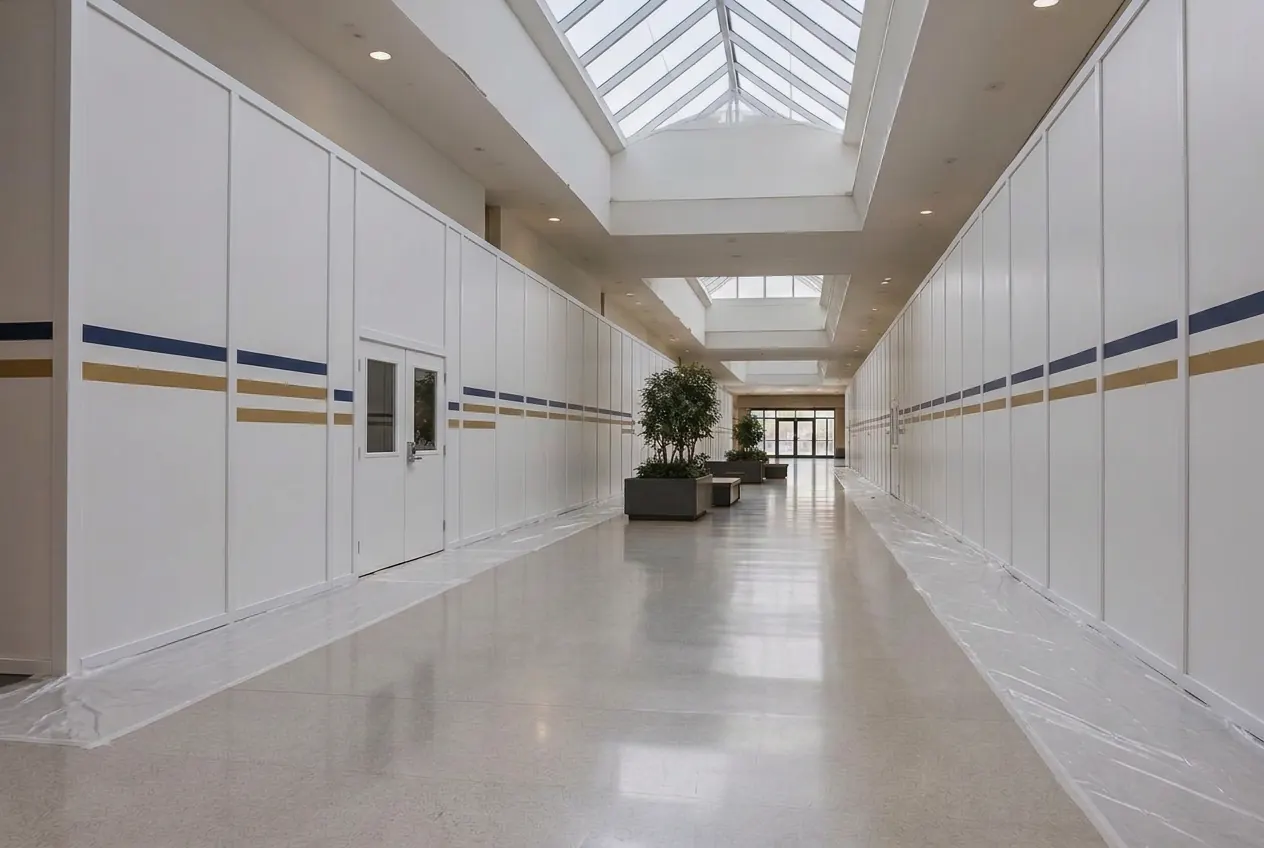
A temporary wall in an occupied building has two jobs: keep the public away from the work, and keep the building working around it. A little planning up front avoids most of the problems we see on site.
Before you ask for a price
Have answers to these, even rough ones:
- Where is the wall line? A marked-up floor plan or a photo with a line drawn on it is enough.
- How tall? Freestanding to a set height, or full height to the ceiling?
- What access do crews need? Single doors for people, double doors for equipment, or a sliding door where there's no room to swing.
- Does it need to lock? Keyed or keypad hardware keeps the public out after hours.
- What will people see? Plain white, signage, or full graphics like a coming-soon message.
- When can you install? Most occupied buildings prefer evenings, nights or weekends.
- Will it change? If the work moves through phases, plan for the wall to move too.
Keep routes and exits clear
The wall can't block exits, fire equipment or required corridor widths. Check the building's rules and walk the route with the property or facility manager before the layout is final.
Think about dust and noise
Full-height walls with sealed joints keep dust on the work side. Solid panels also cut noise more than poly does, which matters next to classrooms, offices and patient rooms.
Make it look intentional
Tenants, shoppers and residents notice temporary walls. A clean, finished wall with clear signage tells people the work is under control. Graphics can turn it into advertising for whatever is opening behind it.
Plan the end
Drywall hoarding has to be demolished and hauled away. Modular panels come down in hours and leave with the installer, with no patching and no dumpster.
Ready to plan yours? Send us a plan or a photo and we'll come back with a layout and a price.