Poly, drywall or modular panels: choosing containment for mould and asbestos work
The material you close the work area with decides how fast you start, how well the boundary holds and how hard the clean-up is. Here's how the three common options compare.
Every mould or asbestos job starts the same way: close off the work area so nothing gets out. How you build that boundary affects the whole job, from day-one set-up to final clearance. Most crews use one of three approaches.
Poly sheeting on a frame
Polyethylene sheeting stapled or taped to studs or poles is cheap and quick to buy. It's the default for a reason, but it has real drawbacks on longer or busier jobs:
- It tears, sags and pulls away from tape, especially under negative air.
- Every phase change means new sheeting, and every tear means a repair.
- At the end, the contaminated poly has to be bagged and disposed of.
- In an occupied building, it doesn't look like a professional job.
Drywall hoarding
Framed and sheeted drywall walls look solid, so they're common in hospitals and commercial buildings. For containment work, though, drywall is a poor match:
- It takes days to frame, board, tape and paint.
- The paper facing soaks up moisture, and damp paper and gypsum are exactly what mould grows on.
- It can't be washed down.
- When the job ends, it's demolished and hauled away, often as contaminated waste.
Modular PVC panels
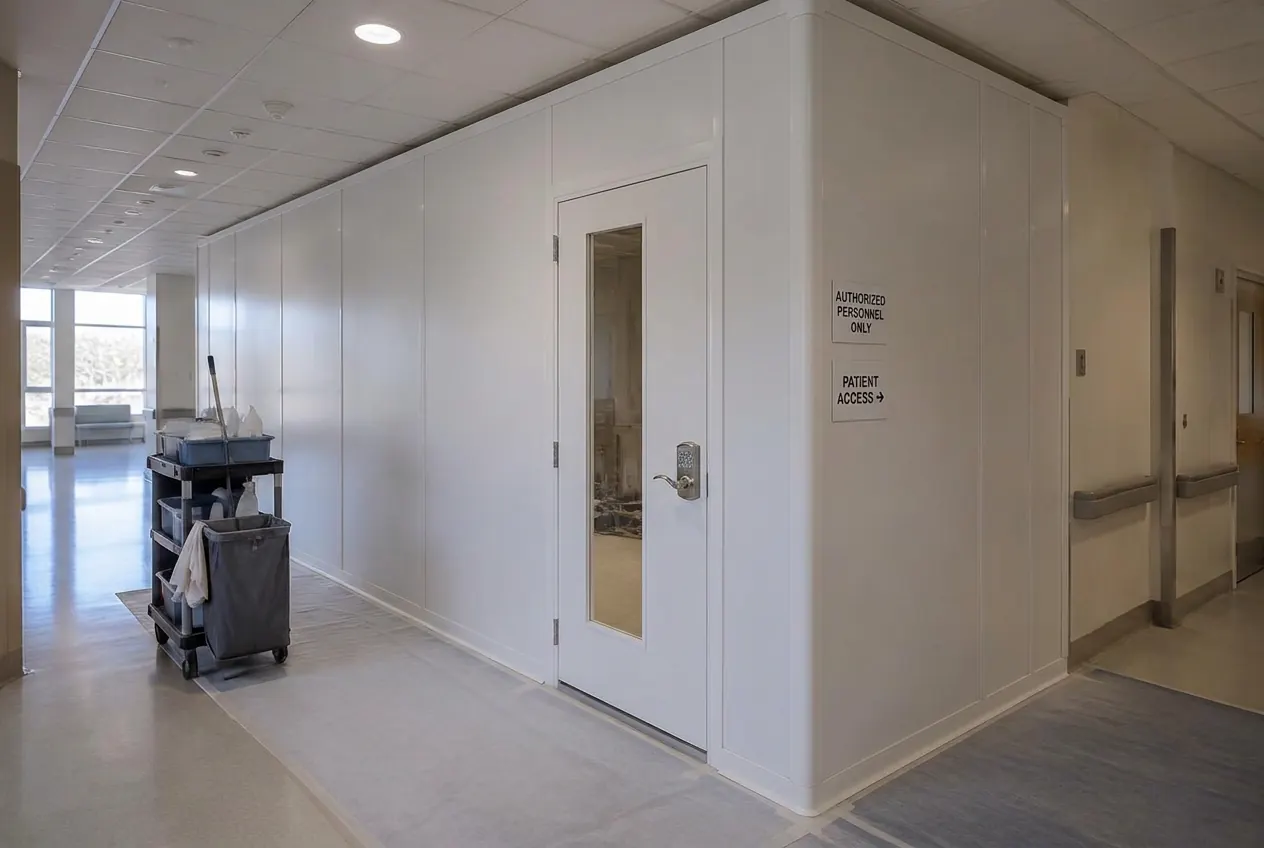
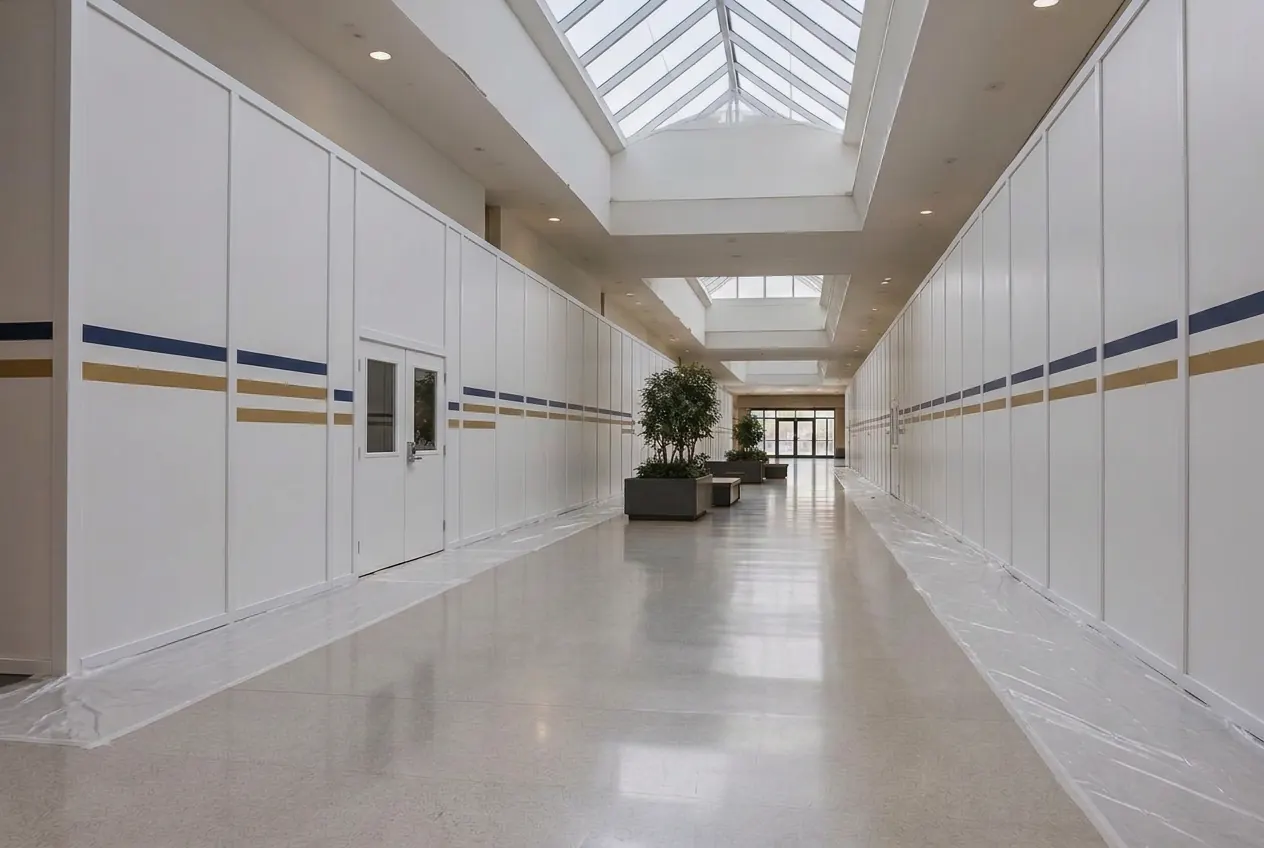
Rigid PVC panels that lock together into a wall or enclosure are a newer option in Canada. They combine the speed of poly with the solidity of drywall:
- A typical enclosure goes up in a single shift, with doors and windows built in.
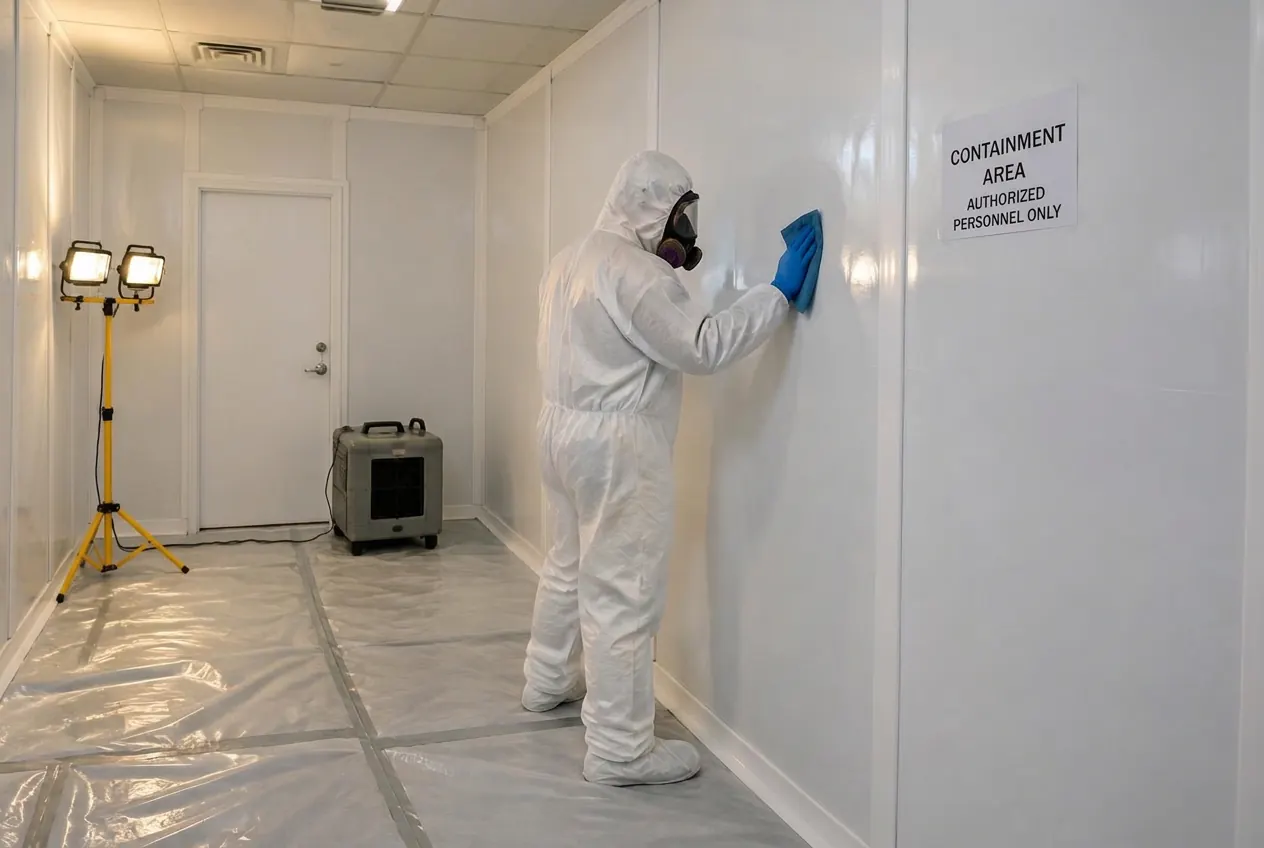
- The smooth faces can be wiped or washed down between phases and before teardown.
- They don't absorb water, so they suit wet and high-moisture areas.
- Sealed joints and fitted doors support the negative air set up by the contractor's air units.
- The panels are reused job after job, so there's far less waste at the end.
Which one should you use?
For a small, one-day job, poly may still be the practical choice. For anything longer, anything in an occupied building, or anything where moisture and wash-downs are part of the work, panels usually save time and clean-up.
Whatever you choose, the containment design, air handling, monitoring and clearance stay with the licensed abatement contractor and the project's consultant. The wall's job is to give them a solid, cleanable boundary to work inside.
If you have a job coming up, send us the drawings and we'll show you what a panel enclosure would look like for your space.